New Science is helping us Remember who they are...


A dolphin having its heart-rate monitored.

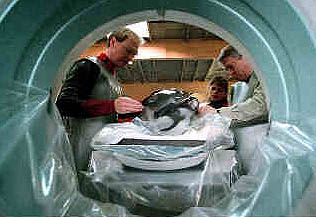
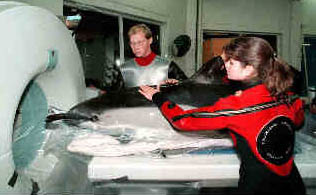
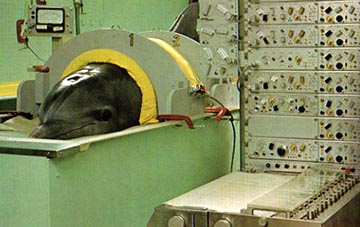
CRT scan for a Dutch dolphin.

Dilphie the dolphin ready for her scan

Studying the respiration of dolphins
has helped us understand how they avoid the "bends"
and has led to advancements in understanding how blood carries oxygen.

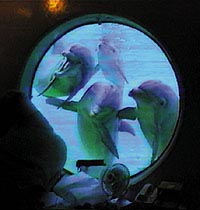
Observing dolphins from underwater
has opened new vistas on their lives and relationships.

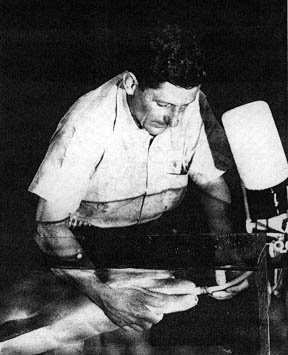
Dr. John Lilly, watching dolphins at Sea Life Park, Hawaii,
from the laboratory of Dr. Ken Marten, of Earth Trust.

In 1862, when three dolphins were put in a freshwater pool in the London Zoo,
two died immediately. One lived for several weeks. As it was dying, a veterinarian was called in,
Dr. Buckland. Here he is shown giving the dolphin a drink of "spirits"
in an attempt to revive it.

From today's perspective, this seems horrible.
However, in context, we can see this as the first example of modern humans
attempting to treat them for illness and to care for them.

In 1962, Dr. Lilly was successfully raising baby dolphins,
as shown here. He developed formula, means for feeding and methods
to learn from dolphins.

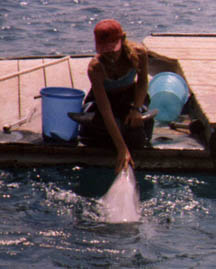
Among trained behaviours for health care (husbandry),
dolphins are taught to present their tails for examination.
If blood samples are needed, this is the easiest place to get a sample.

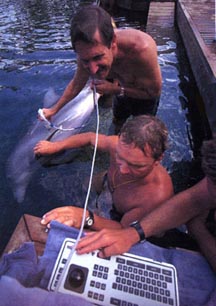
Oddly enough, this is a vet using ultrasound
to check the health of a pregnant dolphin.

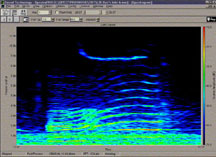
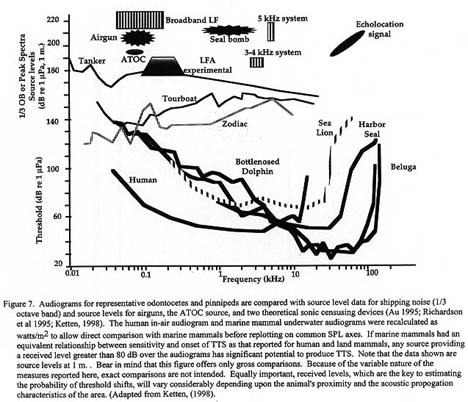
What does the sound of an Orca look like?

Here we see how various sounds sit in a scale of loudness.

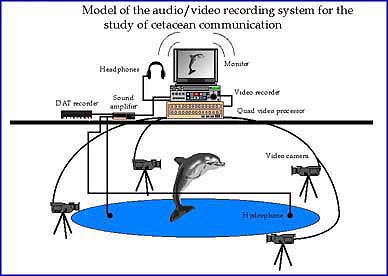
To analyse dolphin sounds, one must put their vocalizations in context,
recording their actions while making the sounds.
This is a design for a research project.

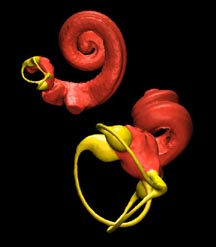
A computer model of the inner ears of a dolphin.

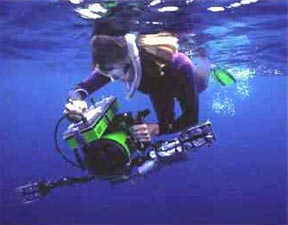
Research in the wild is now highly sophisticated.
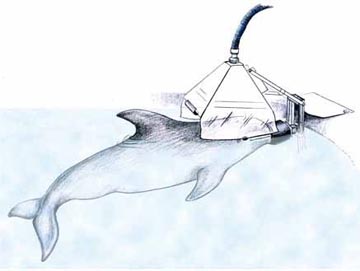
This camera and microphone setup enables the researcher
to locate the source of the sounds with great accuracy
because it is built to emulate the conditions of underwater sound reception.


ARCHIVES


MAIN